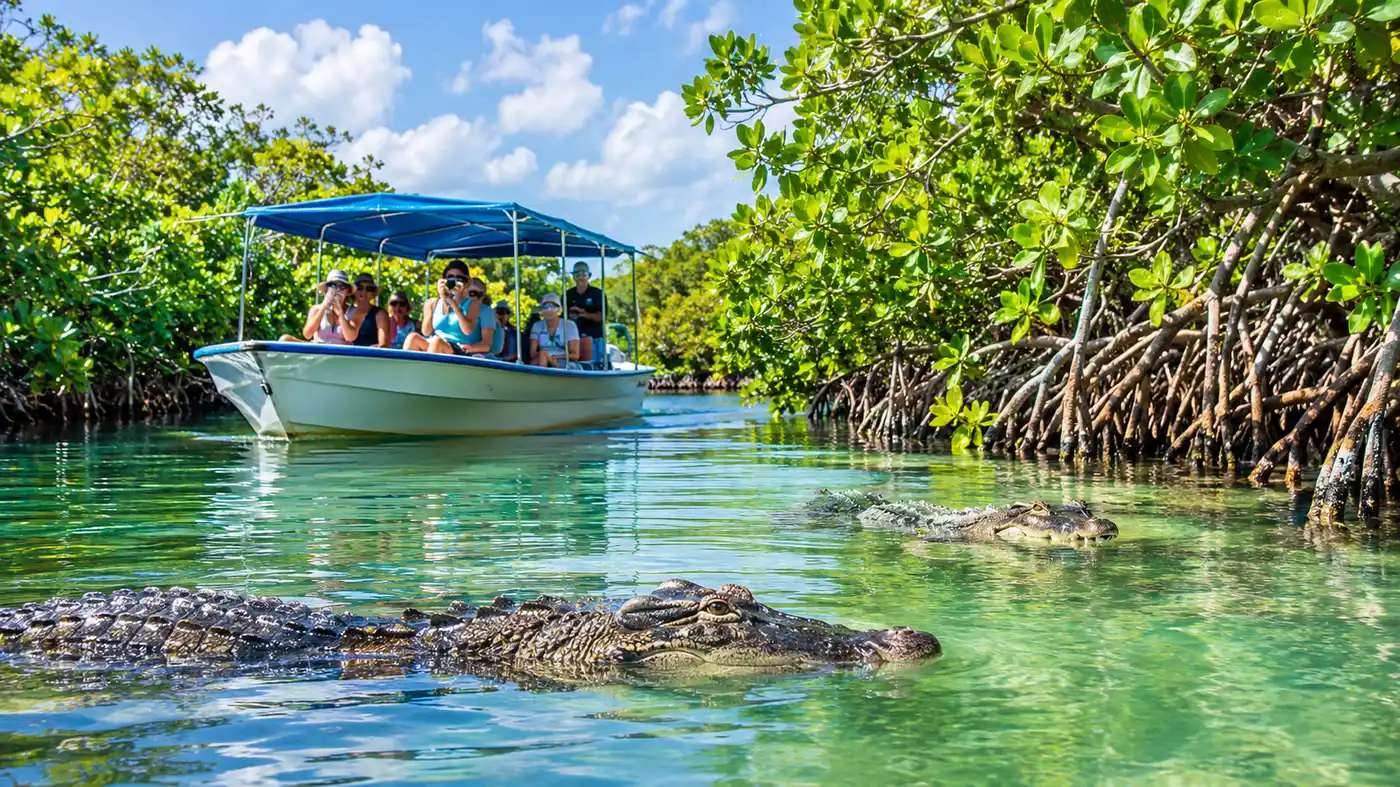
Cancun Jungle Tour Wildlife: Crocodiles and Mangroves
You smell the lagoon before you see the reptiles. It is a mix of damp cedar, sulfur, and thick, salty mud baking under a relentless 90-degree tropical sun. When I first throttled down a tiny two-seater runabout during a jungle tour cancun crocodile search, I expected pristine blue Caribbean water. Instead, the guide steered us straight into a murky green channel flanked by dense walls of tangled roots that felt ancient, prehistoric, and slightly intimidating. A jagged log floated twenty feet ahead in the tea-colored current, except logs do not usually have amber eyes that sink backward beneath the surface without creating a ripple.
Nichupté Lagoon covers roughly 7,000 acres right behind the glittering high-rises of the Cancun Hotel Zone. Most tourists stare past it toward the ocean, which is a mistake. The lagoon complex shelters four distinct species of mangroves, dozens of migratory bird species, and a thriving population of swamp crocodiles that have inhabited these shallow coastal waters long before the first resort broke ground in 1970. Exploring it by small boat strips away the manicured illusion of the Mexican Caribbean, leaving you face-to-face with an untamed wetland ecosystem that operates entirely on its own brutal, beautiful schedule.
Book your jungle tour cancun experience:
Spotting a Jungle Tour Cancun Crocodile in Nichupté Lagoon
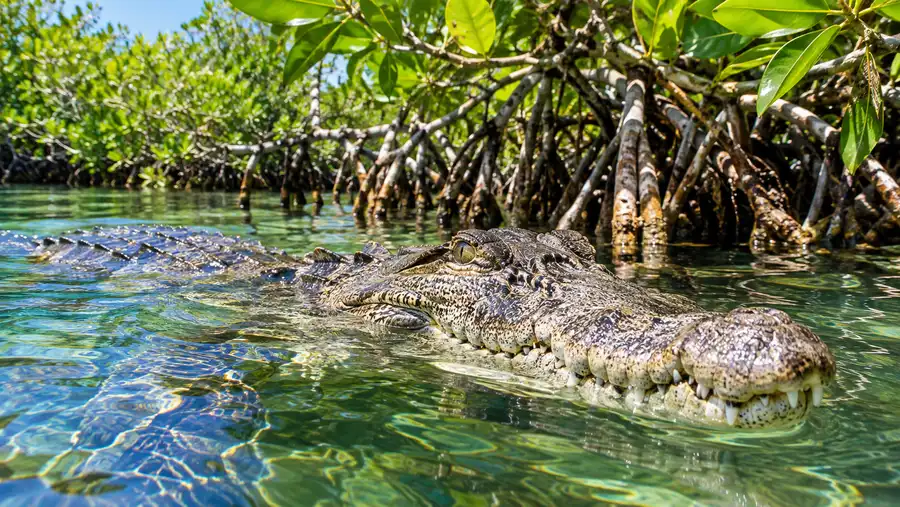
Nichupté is home to two crocodile species, though you will almost exclusively encounter the Morelet's crocodile along the inner canal routes. Also known as the Mexican crocodile, these reptiles top out around eight to ten feet in length, though an old male can occasionally stretch to nearly eleven feet. They have broad snouts, dark grayish-brown hides with banded tails, and an uncanny ability to hold their breath for over an hour while resting on the muddy floor. American crocodiles also wander into the northern estuaries where salinity runs higher, but they are shyer and lean toward deeper, faster currents.
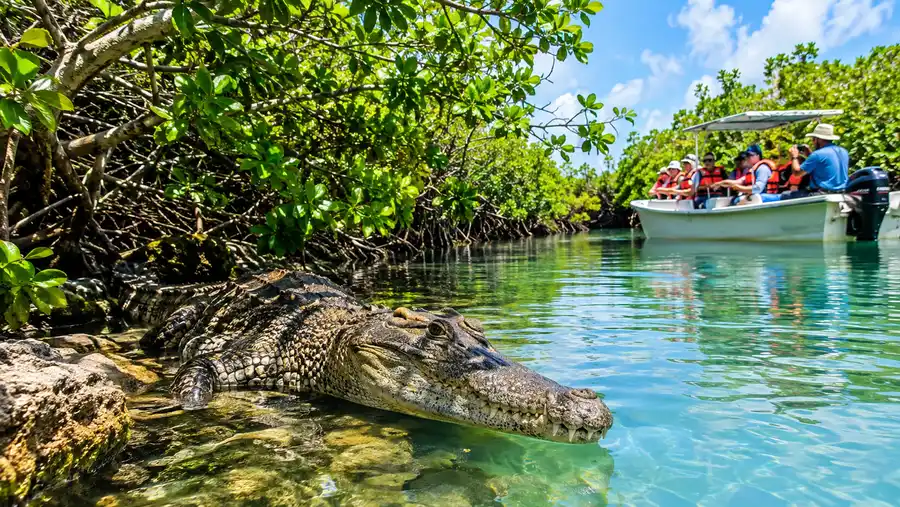
I spotted my first one resting on a collapsed red mangrove branch near the bridge connecting the hotel strip to the mainland. It was roughly six feet long, absolutely motionless, and completely unbothered by the rumble of outboard engines thirty feet away. Tour boat engines do not panic them because the lagoon runs on a continuous soundtrack of marine traffic. They treat watercraft like floating driftwood. Still, you should never dangle your fingers over the gunwale to test their patience.
These animals are ambush predators. They hunt fish, blue crabs, water birds, and small mammals that come down to drink at dusk. Daylight hours are spent thermoregulating. Because reptiles are cold-blooded, they drag themselves onto exposed root mounds or shallow sandspits between 10:00 AM and 1:00 PM to soak up solar heat. If the sun is obscured by cloud cover, your odds of seeing them above the waterline drop dramatically since they prefer staying submerged where water temperatures remain stable.
Note: Nichupté Lagoon is not a swimming hole, and local operators will strictly forbid touching the water inside the channels. Crocodiles here are wild, protected under Mexican law, and completely unpredictable around food or splashing hands.
A few local guides like to name the familiar ones who claim territory near the marina exits. There is an eight-footer named Pancho who has hung around the gas docks for years, fattening up on discarded bait scraps from sportfishing charters. Seeing Pancho wake up and slip into the brown water is enough to make you clutch the steering wheel a little tighter.
Navigating the Mangrove Channels of the Cancun Mexico Jungle
The waterways threading through the Cancun speedboat and snorkel jungle tour routes look like an elaborate maze carved from root and vine. These canals run anywhere from three to twelve feet deep. In the tightest passages, the canopy closes overhead completely, cutting out the glare of the sky and dropping the temperature by a noticeable five degrees. You navigate by following the wake of the guide ahead of you, tracing water alleys known locally as esteros.
Four kinds of trees hold this entire coast together. Red mangrove sits closest to the water, identifiable by sprawling stilt roots that arch out like spider legs to absorb oxygen from the air. Behind them, black mangroves grow on slightly higher ground, sending up hundreds of pencil-like breathing tubes called pneumatophores through the mud. White mangroves and buttonwood trees take up the drier ground farther back. Together, their root systems trap sediment, prevent storm surges from washing Cancun into the sea, and filter nitrates out of urban runoff.
| Species | Primary Habitat | Best Time to Spot | Sighting Probability |
|---|---|---|---|
| Morelet's Crocodile | Shallow mud banks, root clusters | 11:00 AM to 2:00 PM | Moderate (60%) |
| Great Blue Heron | Overhanging branches, canal edges | Early morning | Very High (95%) |
| Green Iguana | Upper canopy on red mangroves | Midday sun | High (80%) |
| Brown Pelican | Open lagoon, bridge pilings | All day | Very High (95%) |
| Spotted Eagle Ray | Sandy bottom near Nizuc inlet | Mid-morning high tide | Low (25%) |
The water looks muddy, but it is actually remarkably clean inside the quiet secondary canals. Tannins leaching out of fallen mangrove leaves stain the water deep amber, almost like over-steeped black tea. If you peer straight down beside the roots, you can see juvenile barracuda, tiny yellow grunts, and sergeant majors hiding in the tangled shadows. The lagoon functions as the primary nursery for the Mesoamerican Barrier Reef. Without these root shelters, ocean fish populations outside the lagoon would collapse within a few seasons.
Every turn brings a sudden blast of bird life. Anhingas perch on wooden warning markers with their wings spread wide to dry in the wind. Bare-throated tiger herons freeze against gray bark, blending so completely into the foliage that you only catch their presence when a bright yellow eye blinks. If you look up into the taller branches around noon, you will often spot three-foot-long green iguanas sunning themselves on high limbs, looking like miniature dinosaurs stranded in the cancun mexico jungle.
The Monkey Jungle Tour Cancun Myth: What Can You Actually Find?
People arrive in Quintana Roo expecting monkeys swinging from the trees behind their hotel. I blame inaccurate excursion brochures that slap stock photos of capuchins across ads for water tours. If you book an excursion hoping for a monkey jungle tour cancun experience inside the Hotel Zone lagoon, you are going to be disappointed. Wild spider monkeys do not live anywhere along the saltwater canals of Nichupté.
Spider monkeys need tall, mature fruit trees like figs, sapodillas, and breadnut to survive, alongside acres of continuous canopy cover so they can travel without touching the forest floor. Mangroves offer none of that. To see wild troops leaping through the trees, you have to drive at least an hour inland toward the freshwater cenotes, deep into the dry tropical forest near Leona Vicario, or down past Tulum to Punta Laguna Reserve.
What you actually get along the Cancun waterways is an incredible array of land animals adapted to swamp edges. Keep an eye out for these creatures along the banks:
- White-nosed coatis: banded-tailed relatives of the raccoon that travel in noisy family bands along the marina edge.
- Mexican spiny-tailed iguanas: darker, stockier cousins of the green iguana that scurry across limestone rock piles.
- Agoutis: skittish, tailless rodents the size of house cats that forage for fallen seeds near dry canal paths.
- Ospreys: massive fish-hawks that build giant stick nests on top of wooden channel navigation markers.
- Blue land crabs: heavy-clawed scavengers that dig deep burrows right where root mulch meets damp soil.
Once you accept that monkeys live elsewhere, the real inhabitants of the mangrove swamp become genuinely thrilling to watch. I spent twenty minutes idling beside a fallen trunk watching a yellow-crowned night heron spear fiddler crabs out of the muck. It moved with mechanical precision, stalking its prey one deliberate step at a time, completely indifferent to the distant hum of jet skis out on the main bay.
Book your jungle tour cancun experience:
Behind the Wheel on a Cancun Jungle Adventure
Driving the small watercraft yourself changes the whole dynamic of wildlife watching. Most tours equip you with a two-person runabout powered by a 30-horsepower outboard engine. You control the throttle with your right hand and steer with a tiny, responsive wheel. It handles roughly like a go-kart on ice, sliding through turns if you cut the wheel too aggressively at high speeds.
Traveling in single file through the canal system, the spray kicks up against your sunglasses, tasting strongly of salt and decaying flora. You bounce across tiny wakes thrown by the boat in front, ducking underneath low-hanging branches wrapped in thorny vines. The wind keeps the heat bearable while you are moving at twenty miles per hour, but the second the guide raises a clenched fist to signal a stop, thick tropical humidity settles onto your shoulders like a hot, wet wool blanket.
Pro tip: Pick the earliest morning departure available, usually 8:30 or 9:00 AM. The lagoon is calm, the heat has not peaked, and crocodiles are far more likely to be out basking before heavy boat traffic stirs the canals.
Silence returns instantly whenever those outboards cut out. You hear the popping and crackling of thousands of tiny snapping shrimp hidden inside the mangrove roots. Water lap-laps against the fiberglass hull. Your guide points silently toward a gap in the branches thirty yards back. It usually takes forty seconds for your eyes to adjust to the heavy shade, but eventually you make out the scutes of a crocodile tail resting on a mud bar. Sitting just eighteen inches above the water line in a tiny boat makes that sight hit your stomach differently than leaning over a concrete railing at a zoo.
Handling these boats requires a light touch. If you hit a submerged root bank at full speed, you will shear the cotter pin on the propeller, leaving your boat dead in the water while the rest of the group floats away. Keep your distance from the boat ahead of you. Swallowing another boat's roostertail wake for forty-five minutes ruins the view and leaves you wiping stinging saltwater out of your eyes instead of looking for wildlife.
Best Hours to Explore the Jungle Cancun Mexico Waterways
Timing alters everything in the wetlands. Go at 2:00 PM on a Tuesday, and you will see dazzling turquoise skies, blinding reflections on the water, and very little animal activity. The birds hide deep in the interior brush to escape the heat, and the reptiles stay submerged where water temperatures sit comfortably in the low eighties. Go earlier or later, and the swamp awakens.
The dawn patrol slot provides the finest photography conditions. Between 7:30 AM and 9:00 AM, the lagoon surface looks like poured lead. Herons and snowy egrets stand motionless along the perimeter channels, hunting the morning shallows before the wind picks up and ripples the water. Fishermen in tiny wooden pangas throw cast nets along the edge of the navigation channel, their movements quiet and rhythmic.
- Morning departures (8:30 AM to 10:30 AM): glass-smooth water, feeding birds, active fish, manageable sun exposure.
- Midday tours (11:30 AM to 1:30 PM): prime sunning hours for crocodiles on dry mudbanks, brightest water colors for reef snorkeling.
- Late afternoon slots (2:30 PM to 4:30 PM): long shadows, feeding predators, cooler breezes, golden light across the mangrove canopy.
Cloudy days feel disappointing when you wake up, but they are actually secret gifts for swamp exploring. Overcast conditions trick nocturnal species into staying active longer. I have seen Morelet's crocodiles swimming boldly across wide channels during light drizzle, hunting near the surface because the glaring sun is not forcing them into deep holes. Bring a cheap waterproof pouch for your phone, leave your fancy leather shoes in the hotel room, and embrace the damp grit of the marsh.
Frequently Asked Questions about jungle tour cancun crocodile
Are crocodile attacks common on Cancun jungle tours?
No. Tour boats maintain safe viewing distances, and crocodiles in Nichupté Lagoon are accustomed to watercraft traffic. As long as you keep your arms and legs inside the boat and do not attempt to feed them, the animals ignore human visitors entirely.
Can you see crocodiles while snorkeling at Punta Nizuc?
Almost never. The snorkeling portion of the jungle tour happens on the open barrier reef at Punta Nizuc, where high wave action, heavy ocean salinity, and clear water create an environment that swamp crocodiles avoid. Crocodiles stay back in the protected brackish mangrove canals.
What should I wear for wildlife watching in the mangroves?
Wear quick-dry clothes, a secure hat with a chin strap, and polarized sunglasses to cut the surface glare so you can spot fish and reptiles below the water line. Apply biodegradable sunscreen before boarding, as traditional chemical sunscreens damage delicate lagoon ecosystems.
Quick Reference
- Morelet's crocodiles grow up to 10 feet long in Nichupté
- No wild monkeys inhabit the Hotel Zone mangroves
- Morning tours offer the calmest water and best bird activity
- Lagoon water is brackish, stained amber by mangrove tannins
- Snorkeling happens outside the lagoon on the ocean reef
Book your jungle tour cancun experience:
My Take on the Nichupté Wilds
Most travelers come to Cancun, drink margaritas by an infinity pool for six days, and fly home believing they saw Mexico. They missed the real show happening behind them. Nichupté Lagoon is messy, humid, unpredictable, and alive with creatures that have zero interest in entertaining tourists. Spending two hours weaving through red mangrove thickets hunting for the snout of a Morelet's crocodile grounds you in the wild reality of this peninsula. Take the wheel yourself, slow down when the roots get thick, and let the ancient swamp remind you that nature always runs the place.
Read more about jungle tour cancun.